
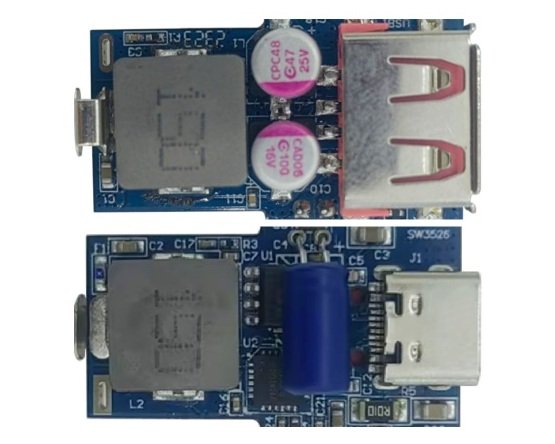
UpSmart PCBA supports OEM & EMS, PCBA for Automotive, automotive USB charger PCBA assembly, car charger PCB manufacturing, AEC-Q compliant PCBA for automotive, 12V to USB fast charger board, vehicle power adapter PCBA service, automotive electronics contract manufacturing, DC-DC converter PCBA for cars, IPC Class 2 automotive PCBA, aftermarket car charger PCB assembly, automotive power supply PCBA solution
If you’ve ever sourced aftermarket car chargers that failed within three months of installation, overheated on long summer drives, or caused FM radio interference loud enough to drown out your station, you already know the hard truth: PCBA for automotive applications is not just consumer electronics repackaged for a car. The 12V vehicle electrical environment is far harsher than most indoor power grids — with load-dump spikes, cold-crank voltage drops, wide temperature swings, and constant vibration that destroy cheap charger boards in months.
This deep dive breaks down a production-ready USB fast car charger PCBA from a manufacturing engineering and procurement perspective. We’ll cover hardware architecture, automotive-specific design tradeoffs, manufacturing quality gates, cost vs. reliability grade selection, and how to vet an EMS partner that delivers consistent, field-proven assemblies — not just low per-unit pricing. No generic marketing claims — just the technical and operational details that determine your field failure rate, compliance risk, and total program cost.
A wall charger only has to handle a stable 120V/240V AC input in a room-temperature environment. A vehicle charger operates inside a dynamic, noisy, temperature-variable electrical system that will punish every design shortcut.
Four challenges separate real automotive USB charger PCBA assembly from repackaged consumer boards:
Boards designed only for desktop use will fail quickly in a vehicle. Every part of the design — from input protection to component placement to copper weight — must be sized for automotive operating conditions.
This dual-port fast charger board is built for 12V passenger vehicles and 24V light commercial vehicles, with multi-protocol support for modern smartphones, tablets, and accessories. It uses a single-chip integrated fast-charge controller to minimize BOM count and improve reliability.
| Category | Specification | Design Note |
| Input Voltage Range | 9 – 36 V DC | Covers 12V cars and 24V trucks; withstands cold-crank drops and moderate load-dump events |
| Main Controller | SW3526 integrated fast-charge IC | Single-chip solution handles PD 3.0, QC 3.0, AFC, FCP, SCP and other mainstream protocols |
| Output Configuration | 1x USB-C + 1x USB-A, dual independent output | Dynamic power allocation when both ports are in use |
| Maximum Output Power | 180 W total | Single-port max power / dual-port split power defined per SKU |
| Protection Features | OVP, OCP, OTP, short-circuit, reverse polarity protection | Full fault protection for both the charger and connected end devices |
| Operating Temperature | -20°C to +85°C | Rated for interior cabin installation; derated for sustained high-temperature operation |
| EMC Design | Input EMI filter network + optimized switching layout | Designed for CISPR 25 pre-compliance; minimizes infotainment interference |
| PCB Construction | 2-layer FR-4, 1.6mm, lead-free HASL | Heavy copper on power paths for improved thermal dissipation |
| Workmanship Standard | IPC-A-610 Class 2 | Standard for aftermarket automotive accessories; Class 3 available on request |
The single-chip architecture is a deliberate choice for aftermarket car charger PCB assembly. It reduces component count, cuts assembly cost, and improves reliability by eliminating multiple discrete protocol chips that would otherwise introduce additional failure points.
Three design decisions separate this board from low-cost commodity chargers and directly reduce field failure rates.
The input stage includes a fuse, reverse-polarity protection diode, TVS transient suppressor, and bulk electrolytic capacitance. This network absorbs the voltage spikes and dips normal to a vehicle electrical system, so the downstream DC-DC converter sees a stable, clamped input. Cheap chargers skip the TVS and undersize the input capacitor — and fail within months when a load-dump event blows the converter chip.
High-current paths use wide copper pours and thick copper weight to spread heat away from the switching MOSFETs and inductor. Power components are placed away from the board edges and positioned for natural convection cooling. This prevents thermal shutdown and component degradation during sustained full-power charging on hot days.
The switching loop is kept physically small, with a dedicated ground plane and input pi-filter network to reduce conducted and radiated noise. This is the most commonly skipped optimization on cheap chargers — and the most common cause of FM radio static and GPS signal disruption. For automotive power supply PCBA solution programs, EMI performance is not a nice-to-have; it is a market-access requirement in most regions.
Reliable volume production requires defined, repeatable process gates — not hand-built prototypes. A mature automotive electronics contract manufacturing flow for charger boards includes these mandatory steps:
Not every automotive program requires full AEC-Q qualification. Choosing the right grade is one of the highest cost and reliability decisions a procurement team makes.
| Criteria | Aftermarket Commercial Grade | OEM AEC-Q100 Grade |
| Component rating | Industrial/commercial grade | AEC-Q100 / AEC-Q200 qualified components |
| Operating temperature | 0 – 60°C typical rating | -40°C to +105°C or wider |
| Load-dump immunity | Basic TVS protection | Full ISO 7637 pulse immunity |
| EMC performance | Basic filtering; pre-compliance design | Full CISPR 25 certified |
| Vibration resistance | Standard solder joints; moderate vibration tolerance | IEC 60068-2-6 qualified; reinforced heavy components |
| Relative per-unit cost | 1.0x baseline | 2.0 – 2.5x baseline |
| Typical field failure rate | 2 – 5% annualized | < 0.5% annualized |
| Best fit | Aftermarket 12V cabin accessories, consumer upgrade parts | Factory OEM fitment, commercial fleets, safety-related applications |
For most aftermarket accessory programs, a well-designed industrial-grade board delivers the best balance of cost and reliability. Full AEC-Q compliant PCBA for automotive is only justified for factory-installed or commercial-vehicle programs where failure consequences and warranty costs are much higher.
Automotive PCBA refers to printed circuit board assemblies designed and manufactured for use in motor vehicles. These assemblies are built to withstand wider temperature ranges, voltage transients, vibration, and EMC requirements that standard consumer PCBAs do not need to meet.
No. AEC-Q100/Q200 qualification is required for OEM factory-installed components and safety-critical systems. Aftermarket interior accessories commonly use high-quality industrial-grade components to balance cost and reliability for cabin-use applications.
Undersized input protection is the number one failure cause. Cheap boards skip input TVS and undersize bulk capacitance, so the first strong load-dump event or jump-start blows the main converter chip. Solder fatigue on USB connectors from vibration is the second most common failure.
Technically, yes, but the results are usually inconsistent. Automotive assembly requires tighter process control, better traceability, component grade management, and test coverage that most consumer-focused shops do not maintain as standard practice.
At minimum: in-circuit test, full-load functional test, and short-circuit / over-voltage fault simulation. High-volume programs should also include burn-in screening to catch early-life failures before units ship to customers.
If you’re developing a USB car charger or other 12V automotive power accessory and need a manufacturing partner with real power electronics and automotive experience, send us your schematic, BOM, and target volume. Our engineering team will provide a complimentary DFM review, risk assessment, and transparent quotation with clearly separated NRE and per-unit costs.
We specialize in high-volume PCBA for automotive aftermarket accessories, power converters, and in-cabin electronics, with controlled manufacturing processes, full traceability, and built-in EMC and reliability design support. Contact us today to discuss your program.
UpSmart PCBA brings nearly a decade of expertise to multilayer PCB manufacturing, serving industrial clients worldwide that demand tight tolerances, long-term durability, and batch-to-batch consistency.
We focus on custom PCB fabrication and full turnkey PCBA assembly. Your design files move straight through production into fully built, tested units ready for final installation — no fragmented handoffs between separate vendors. We scale seamlessly from small prototype runs to high-volume mass production, with end-to-end in-house capabilities spanning component sourcing, bare board manufacturing, in-process quality testing, and final packaging.
We build every order around three non-negotiables: quality, engineering rigor, and reliable turnaround. For our global industrial customers, this translates to simpler supply chains, fewer production disruptions, and electronic systems that deliver consistent performance over their full service life.
Email: sales@upsmartpcba.com
WhatsApp/Phone: +86 199 2656 6516
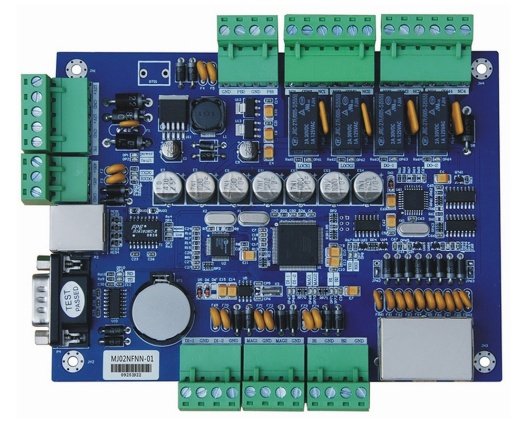
UpSmart PCBA supports OEM & EMS, PCBA for Industrial Control, industrial IO control board assembly, multi-channel relay output PCBA, PLC control card PCBA manufacturing, industrial data acquisition PCBA, factory automation controller board, IPC Class 3 industrial PCBA, industrial control board EMS service, analog input output module PCBA, rugged industrial controller PCB assembly, 24V industrial relay module PCBA
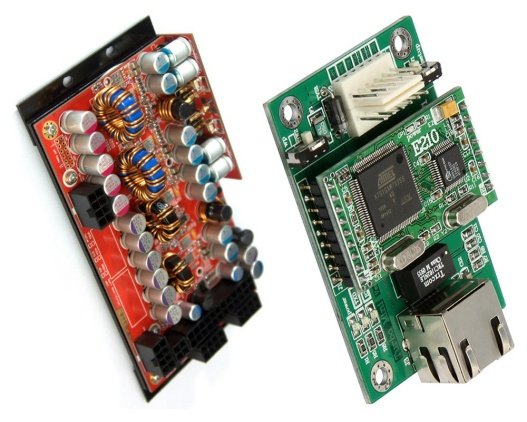
UpSmart PCBA supports OEM & EMS, PCBA for Power Supply, multi-channel DC-DC converter PCBA, industrial power supply board assembly, high current power module manufacturing, regulated power supply PCB service, switch mode power supply PCBA, power electronics contract manufacturing, IPC Class 2 power supply assembly, custom power converter board EMS, isolated power supply PCBA design, power supply unit (PSU) PCBA service
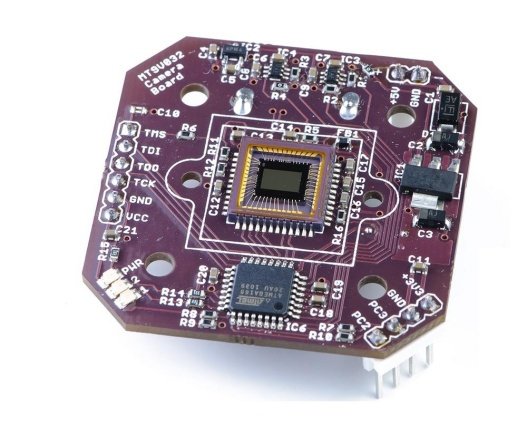
UpSmart PCBA supports OEM & EMS, PCBA for Security, security camera PCB assembly, CMOS sensor module for surveillance, analog CCTV camera PCBA, IP camera motherboard assembly, low light imaging PCBA for security, IPC-A-610 security electronics assembly, surveillance camera board manufacturing, security device PCBA traceability, machine vision camera module PCBA, infrared security camera PCB
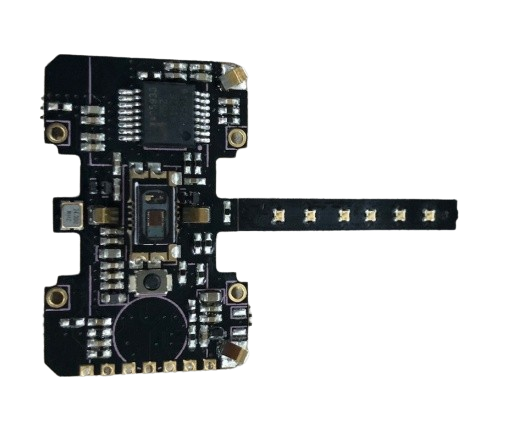
UpSmart PCBA supports OEM & EMS, PCBA for Wearables, wearable health tracker PCBA assembly, flexible PCB for smart wristband, Bluetooth low energy wearable module, biometric sensor PCB for wearables, 9-axis motion tracking PCBA, miniature wearable electronics manufacturing, low power wearable device PCB, smart bracelet PCBA service, IPC Class 2 wearable assembly, skin contact wearable PCBA design
specializing in end-to-end printed circuit board fabrication and full-turnkey PCB assembly services.