
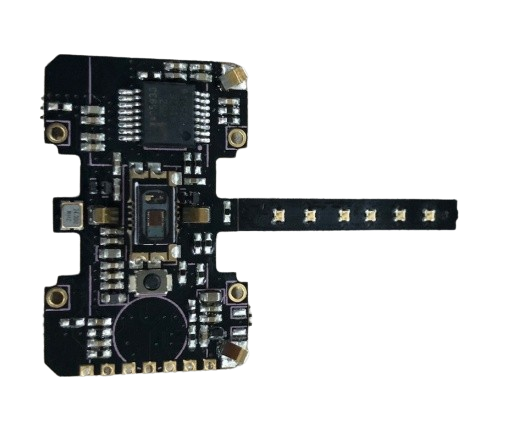
UpSmart PCBA supports OEM & EMS, PCBA for Wearables, wearable health tracker PCBA assembly, flexible PCB for smart wristband, Bluetooth low energy wearable module, biometric sensor PCB for wearables, 9-axis motion tracking PCBA, miniature wearable electronics manufacturing, low power wearable device PCB, smart bracelet PCBA service, IPC Class 2 wearable assembly, skin contact wearable PCBA design
If you’ve ever brought a wearable health product to market, you already know the hard truth: PCBA for wearables is not just miniaturized consumer electronics. Every design decision trades off size, battery life, sensor accuracy, and mechanical reliability — and most programs that work perfectly on a bench prototype fail in volume production because of unmanaged fine-pitch assembly, sensor calibration drift, or flex-to-rigid connection fatigue.
This deep dive breaks down a production-ready health monitoring wristband PCBA from a manufacturing engineering and procurement perspective. Built around a TI CC2640 BLE platform with 9-axis motion tracking and bio-impedance sensing, this design balances clinical-grade measurement capability with multi-day battery life and a wrist-wearable form factor. We’ll cover system architecture, critical design tradeoffs, manufacturing quality gates, grade selection, and how to vet an EMS partner that can deliver consistent volume yield — not just one-off working samples. No generic marketing fluff — just the technical and operational details that determine your field reliability, production yield, and total program cost.
This assembly is the main control board for a wrist-worn health and activity tracker, purpose-built for continuous biometric monitoring, motion tracking, and Bluetooth Low Energy connectivity. The design uses a rigid main board with a flexible LED strip extension for visual feedback, optimized for ultra-low power and minimal footprint.
| Category | Specification | Design Rationale |
| Main MCU | TI CC2640F128RGZT BLE wireless MCU | Single-chip 2.4GHz Bluetooth Low Energy solution with integrated MCU and radio; optimized for coin-cell / small Li-ion battery operation |
| Motion Sensor | ICM-20498 9-axis motion tracking device | 3-axis accelerometer + 3-axis gyro + 3-axis compass for activity tracking, sleep monitoring, and orientation detection |
| Biometric Front-End | AD5933 impedance converter + INA826 precision instrumentation amp | Enables bio-impedance measurement for body composition, hydration, and heart rate-related metrics via skin contact electrodes |
| Memory | W25Q16JVUXIM 16Mbit serial flash | Stores firmware, user data, and sensor logging buffers |
| Power Management | MAX1555 charge controller + ADP150 LDO regulators (1.8V / 3.0V / 3.3V) | Multi-rail domain design for power optimization; separate rails for analog, digital, and RF sections |
| User Interface | 6x RGB LEDs on flexible strip + vibration motor + tactile button | Flexible LED strip wraps around wristband body; haptic feedback for alerts |
| Battery | 3.7V 110 mAh rechargeable Li-polymer cell | 4.5-day typical battery life with normal use |
| PCB Construction | Rigid main board + FPC LED extension; 0402 minimum component size | Fits standard wristwatch form factor; flex section withstands repeated bending |
| Workmanship Standard | IPC-A-610 Class 2, with Class 3 critical paths on analog front-end | Balances cost and reliability for consumer health wearable applications |
The multi-rail power architecture is a defining choice for low-power wearable device PCB designs. By separating analog, digital, and RF into independently switched domains, the firmware can shut down unused sections during sleep — extending battery life by 30–40% compared to a single-rail design.
Wearable form factors force trade-offs that do not exist in larger consumer products. These are the four highest-risk design areas, and how this architecture addresses them.
Nearly all passives on this board are 0402 [1005 metric] package size, with WLCSP regulators and QFN sensors as fine as 0.5mm pitch. This places strict requirements on stencil design, placement accuracy, and reflow profiling. The layout places all fine-pitch devices on the primary side to simplify assembly, with passives on both sides for maximum density. This is a standard best practice for miniature wearable electronics manufacturing — mixing component sizes on one side dramatically improves first-pass yield.
Bio-impedance and precision measurement circuits are extremely sensitive to digital switching noise. In this design, the analog front-end section is physically partitioned from the MCU and radio section, with a dedicated ground plane and isolated power rail. The high-impedance sensor traces are kept short, shielded, and routed away from clock and switching paths. This is the difference between a sensor that reads consistently and one that drifts with motion, battery level, or RF transmission — a make-or-break feature for biometric sensor PCBs for wearables targeting health use cases.
The LED indicator strip is built on a flexible PCB that bends around the wristband body. The junction between the rigid main board and the FPC extension is the single most common mechanical failure point in wrist-worn devices. This design uses a constrained flex exit point with strain relief, and the interface is validated for 100,000 bending cycles. For flexible PCB for smart wristband programs, this validation step is non-negotiable before volume production.
Wearable devices are exposed to sweat, humidity, temperature swings, and constant skin contact. The PCBA is designed for conformal coating compatibility, with all exposed metal on contact paths using corrosion-resistant finishes. ESD protection is placed on all external-facing paths, including button contacts and charge pins. Field return data consistently shows that corrosion and ESD damage cause 40% of wearable field failures — most of which are preventable with proper up-front layout choices.
Consistent volume production of miniature wearable assemblies requires tighter process control than standard consumer PCBA. A mature smart bracelet PCBA service flow includes these mandatory gates:
For wearable health tracker PCBA assembly, per-unit sensor calibration is the step that most inexperienced EMS partners skip — and the step that most determines real-world product performance.
Not every wearable program requires the same level of precision and certification. Choosing the right grade is one of the highest cost and risk decisions a procurement team makes.
| Grade | Typical Use Case | Sensor Accuracy | Battery Life Target | Required Compliance | Relative Cost | Typical First-Pass Yield Target |
| Consumer Entry | Basic activity tracker, notification band | Basic step counting only | 7–14 days | RoHS / REACH | 1.0x baseline | 96 – 98% |
| Health-Focused | Wellness tracker, heart rate/body composition | Clinical-grade consumer accuracy | 3–7 days | RoHS / REACH + biocompatible contact materials | 1.6 – 2.0x | 92 – 95% |
| Medical-Grade | FDA-cleared vital signs monitor | Certified measurement accuracy | 1 – 3 days | ISO 13485, FDA QSR, 510(k) | 3.0 – 5.0x | 88 – 92% |
Most health wristband programs fall into the health-focused middle tier. They deliver meaningful measurement quality without the cost and timeline of full medical certification.
Wearable assemblies use much smaller component sizes, require stricter power optimization, must integrate flexible sections, and face harsher skin-contact and environmental conditions. They also usually require per-unit sensor calibration that standard consumer boards do not.
Higher cost comes from finer-pitch assembly, lower yields on dense layouts, per-unit calibration, flexible section integration, and stricter inspection requirements. Component costs are also higher for miniaturized and low-power parts.
Technically, yes, but yield and reliability vary dramatically. Miniature components, flex integration, and sensor calibration all require specialized process setup and operator training that most general-purpose EMS lines do not maintain as standard.
Critical for any health or biometric function. Uncalibrated sensors produce inconsistent results across units, which destroys user trust and causes returns. Every unit must be calibrated against a traceable reference, and the calibration values stored on-board.
Flex-to-rigid connection fatigue is the number one mechanical failure cause. Corrosion from sweat and moisture is the second most common. Both are largely preventable with proper design and process controls.
If you’re developing a health tracker, smart wristband, or other wearable product and need a manufacturing partner with real miniature assembly and sensor calibration experience, send us your design files, BOM, and target volume. Our engineering team will provide a complimentary DFM review, risk assessment, and transparent quotation with clearly separated NRE and per-unit costs.
We specialize in high-volume PCBA for wearables, including health trackers, smart bands, and sensor wearables, with controlled fine-pitch assembly, in-house calibration, and full quality traceability. Contact us today to discuss your program.
UpSmart PCBA brings nearly a decade of expertise to multilayer PCB manufacturing, serving industrial clients worldwide that demand tight tolerances, long-term durability, and batch-to-batch consistency.
We focus on custom PCB fabrication and full turnkey PCBA assembly. Your design files move straight through production into fully built, tested units ready for final installation — no fragmented handoffs between separate vendors. We scale seamlessly from small prototype runs to high-volume mass production, with end-to-end in-house capabilities spanning component sourcing, bare board manufacturing, in-process quality testing, and final packaging.
We build every order around three non-negotiables: quality, engineering rigor, and reliable turnaround. For our global industrial customers, this translates to simpler supply chains, fewer production disruptions, and electronic systems that deliver consistent performance over their full service life.
Email: sales@upsmartpcba.com
WhatsApp/Phone: +86 199 2656 6516
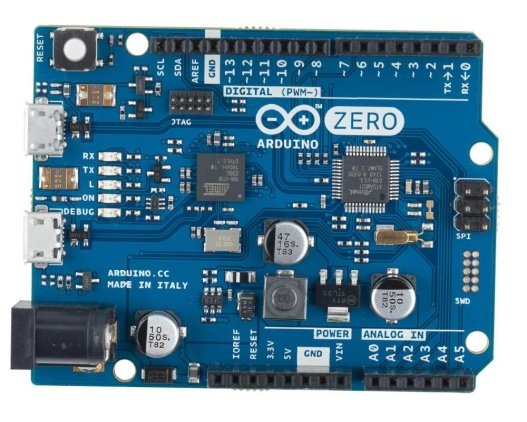
UpSmart PCBA supports OEM & EMS, PCBA for Consumer, open-source development board PCBA, Arduino compatible controller board, consumer electronics PCB assembly, maker education development board, hobbyist electronic controller PCB, USB powered microcontroller board, DIY electronic project kit PCBA, IPC Class 2 consumer PCBA, educational electronics kit assembly, retail consumer electronics PCB manufacturing
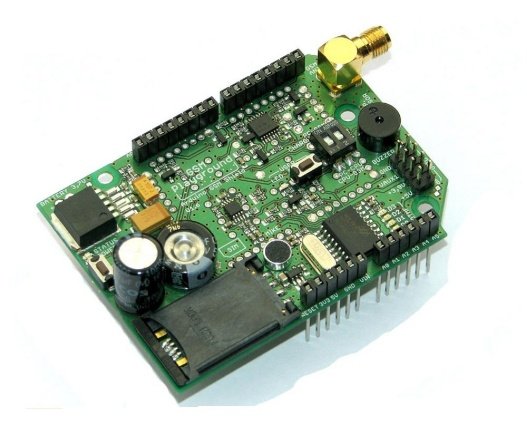
UpSmart PCBA supports OEM & EMS, PCBA for IoT, GSM GPRS IoT module PCBA, industrial IoT gateway board assembly, cellular IoT terminal PCBA, low power IoT device PCB, battery powered IoT sensor node assembly, IoT connectivity module PCBA service, embedded IoT control board manufacturing, wireless IoT communication PCBA, SIM based IoT device assembly, industrial grade IoT electronics PCBA
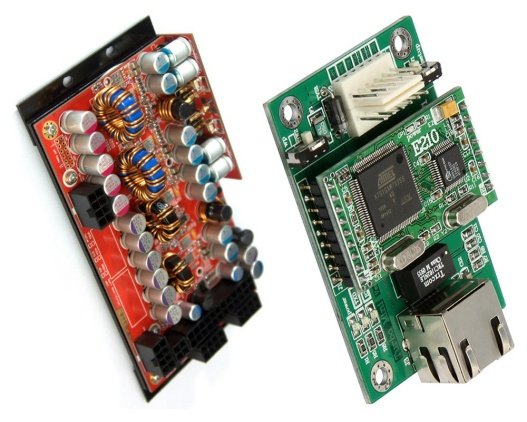
UpSmart PCBA supports OEM & EMS, PCBA for Power Supply, multi-channel DC-DC converter PCBA, industrial power supply board assembly, high current power module manufacturing, regulated power supply PCB service, switch mode power supply PCBA, power electronics contract manufacturing, IPC Class 2 power supply assembly, custom power converter board EMS, isolated power supply PCBA design, power supply unit (PSU) PCBA service
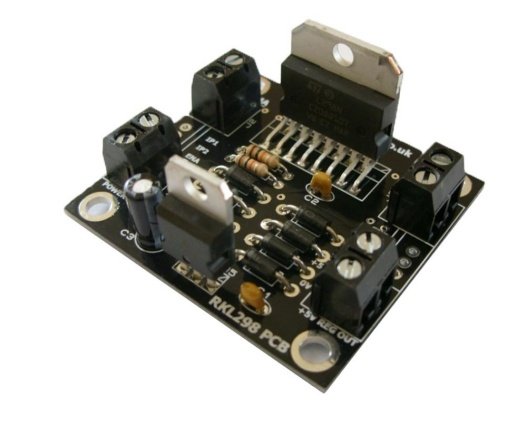
UpSmart PCBA supports OEM & EMS, PCBA for Robotics, dual H-bridge motor driver PCBA, L298N motor controller board assembly, DC motor drive PCBA for robotics, smart car motor driver PCB, industrial robot motion control PCBA, stepper motor driver module assembly, robotics power electronics PCBA, IPC Class 2 robot controller board, embedded motor drive PCB manufacturing, mobile robot motor control PCBA
specializing in end-to-end printed circuit board fabrication and full-turnkey PCB assembly services.