
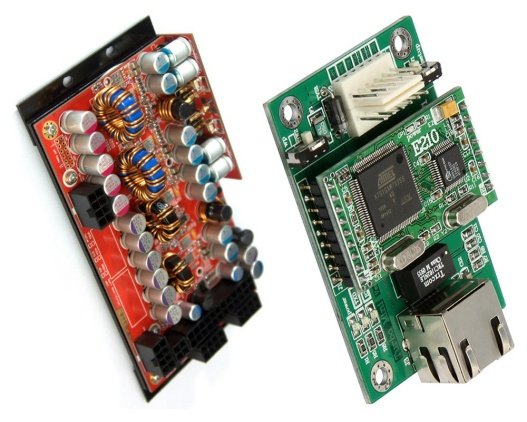
UpSmart PCBA supports OEM & EMS, PCBA for Power Supply, multi-channel DC-DC converter PCBA, industrial power supply board assembly, high current power module manufacturing, regulated power supply PCB service, switch mode power supply PCBA, power electronics contract manufacturing, IPC Class 2 power supply assembly, custom power converter board EMS, isolated power supply PCBA design, power supply unit (PSU) PCBA service
If you’ve ever deployed a power supply that passed every low-load bench test but failed thermally or missed EMC targets on the first production run, you already know the hard truth: PCBA for power supply products is not just placing semiconductors and capacitors on a board. Switching power electronics are unforgiving of layout shortcuts — a few millimeters of extra trace length, poor thermal pad design, or a fragmented ground plane can turn a theoretically correct schematic into a unit that overheats, radiates noise, or fails catastrophically under full load.
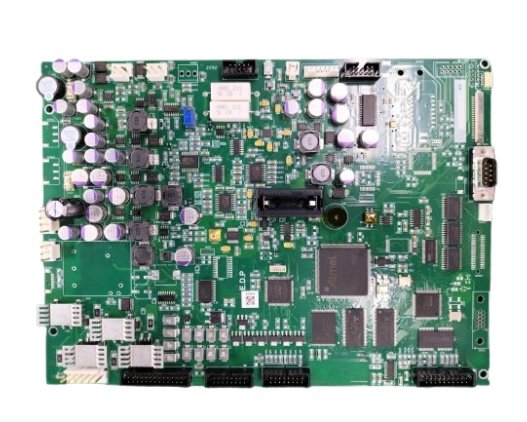
This deep dive breaks down two complementary industrial power system PCBAs: a multi-channel high-current DC-DC converter module (red board) and an intelligent power control & communication interface board (green board with Ethernet), built for embedded industrial and commercial power delivery applications. We’ll cover hardware architecture, critical design tradeoffs that directly impact field reliability, volume manufacturing quality gates, performance grade selection, and how to vet an EMS partner that delivers consistent, production-ready power assemblies — not just units that work at 20% load on a workbench. No generic marketing claims — just the technical and operational details that determine your failure rate, compliance path, and total program cost.
The assembly pair forms a complete configurable power delivery system: the lower board handles raw power conversion and regulation, while the upper board provides supervisory control, telemetry, and network connectivity for remote monitoring and configuration.
| Category | Multi-Channel DC-DC Power Stage Board | Intelligent Power Control Interface Board |
| Core Function | Multi-rail DC voltage conversion and regulated power output | Supervisory monitoring, fault reporting, and networked power control |
| Topology | Multi-output buck converter with magnetically isolated stages | Embedded microcontroller with wired Ethernet and serial IO |
| Input Voltage Range | 36 V DC nominal; wide-range operation | 3.3V / 5V derived from the power stage |
| Output Configuration | 8 independent regulated output rails | Discrete control signals + 10/100 Ethernet telemetry |
| Output Current Rating | Up to 5 A per channel, total 120 W | N/A (signal-level control only) |
| Primary Silicon | Discrete power MOSFETs + PWM controller ICs | Atmel embedded MCU with integrated Ethernet MAC + PHY |
| Protection Features | OVP, OCP, OTP, short-circuit, input reverse polarity | Watchdog timer, remote shutdown, fault logging |
| PCB Construction | 2-layer FR-4, 2 oz copper on power paths | 2-layer FR-4, controlled impedance for Ethernet differential pairs |
| Thermal Design | Natural convection optimized; mounting points for optional heatsink | Passive convection, no active cooling required |
| Workmanship Standard | IPC-A-610 Class 2 | IPC-A-610 Class 2 |
The split architecture — power stage and control stage on separate assemblies — is a deliberate choice for industrial power supply board assembly systems. It isolates noisy switching circuits from sensitive control and communication circuits, simplifies thermal management, and allows control interfaces to be upgraded without re-qualifying the power stage.
Four layout and design choices directly determine long-term reliability, and they are the most commonly skipped optimizations on low-cost commodity power boards.
The switching current loops on the power stage are kept as short and wide as physically possible, with continuous ground planes under all power paths. Parasitic inductance in the power loop is the single biggest cause of voltage spikes, switching losses, and EMI radiation in switch-mode power supply PCBA designs. Cheap boards route power paths like signal traces, and the resulting spike energy destroys MOSFETs and generates radiated noise that fails EMC testing on the first try.
High-current paths use 2 oz copper pours to spread heat evenly across the board, with power components placed to avoid hot-spot stacking. Thermal pad sizing and via stitching are calculated to match component dissipation, not just placed by default. For high-current power module manufacturing, thermal design is not an afterthought — it is the primary layout constraint. A board with correct schematic values but poor thermal design will still fail within months of continuous operation.
The switching node is physically isolated from input and output connectors, with pi-filter networks on all external ports to suppress conducted noise. Differential signal pairs on the control board are length-matched and routed over solid ground planes to maintain signal integrity. For regulated power supply PCB service programs targeting commercial or industrial markets, pre-compliant layout routinely saves 2–3 certification cycles and tens of thousands of dollars in lab fees.
Power ground and signal ground connect at a single point, eliminating ground bounce and common-mode noise that would disrupt control signals and Ethernet communication. Anyone who has debugged a power system where communication drops out at high load knows this problem. For network-connected power supply unit (PSU) PCBA service designs, clean domain partitioning is the difference between stable telemetry and random communication dropouts.
Delivering consistent power electronics contract manufacturing at volume requires defined, auditable process steps that go far beyond standard SMT assembly. For these power assemblies, the controlled workflow includes these mandatory gates:
For custom power converter board EMS programs, loaded burn-in testing is the step that most inexperienced partners skip — and the step that catches 80% of field failures before units leave the factory.
Not every power program requires full industrial or medical-grade performance. Choosing the right grade is one of the highest cost and reliability decisions a procurement team makes.
| Grade | Typical Application | MTBF Target | Safety & EMC | Relative Cost | Best For |
| Consumer Commercial | Indoor adapters, low-duty-cycle consumer devices | 30,000 – 50,000 hours | Basic safety; limited EMC | 1.0x baseline | Low-cost indoor consumer electronics |
| Industrial | Factory automation, telecom infrastructure, 24/7 operation | 100,000+ hours | Full industrial EMC; IEC 61010 | 1.8 – 2.5x | Continuous-operation industrial and commercial systems |
| High-Reliability | Medical, aerospace, safety-critical power | 500,000+ hours | Medical / aerospace safety standards | 4.0 – 6.0x | Safety-critical and long-service-life deployments |
Most industrial embedded power programs fall into the industrial grade. Full high-reliability grade is only justified for safety-critical or extremely long-service-life deployments.
Power supply PCBA refers to printed circuit board assemblies purpose-built for power conversion, regulation, and delivery. These assemblies handle higher currents, require careful thermal and EMI design, and must meet stricter safety and reliability requirements than standard signal-level PCBAs.
Most failures trace back to three layout shortcuts: undersized copper on power paths, excessive power loop inductance, and poor grounding that creates noise and thermal issues. All three are invisible on a schematic and only appear under real load conditions.
Technically, yes, but reliability varies dramatically. Power electronics require specialized stencil design, soldering profiles, and load testing that most general-purpose assembly lines do not maintain as standard practice.
Thermal overstress from undersized copper and poor heat spreading is the number one failure cause. The second most common is switching spike damage from long, high-inductance power loops. Both are fully preventable with proper layout and process controls.
For production volumes above a few hundred units, burn-in almost always pays for itself in reduced field returns and warranty costs. It is especially valuable for power supplies, where early-life power component failures are common but easy to screen out.
If you’re developing a DC-DC converter, industrial power system, or custom power supply and need a manufacturing partner with real power electronics experience, send us your design files, BOM, and target volume. Our engineering team will provide a complimentary DFM review, risk assessment, and transparent quotation with clearly separated NRE and per-unit costs.
We specialize in high-volume PCBA for power supply, including DC-DC converters, industrial power modules, and networked power systems, with controlled manufacturing processes, full traceability, and built-in thermal and reliability design support. Contact us today to discuss your program.
UpSmart PCBA brings nearly a decade of expertise to multilayer PCB manufacturing, serving industrial clients worldwide that demand tight tolerances, long-term durability, and batch-to-batch consistency.
We focus on custom PCB fabrication and full turnkey PCBA assembly. Your design files move straight through production into fully built, tested units ready for final installation — no fragmented handoffs between separate vendors. We scale seamlessly from small prototype runs to high-volume mass production, with end-to-end in-house capabilities spanning component sourcing, bare board manufacturing, in-process quality testing, and final packaging.
We build every order around three non-negotiables: quality, engineering rigor, and reliable turnaround. For our global industrial customers, this translates to simpler supply chains, fewer production disruptions, and electronic systems that deliver consistent performance over their full service life.
Email: sales@upsmartpcba.com
WhatsApp/Phone: +86 199 2656 6516
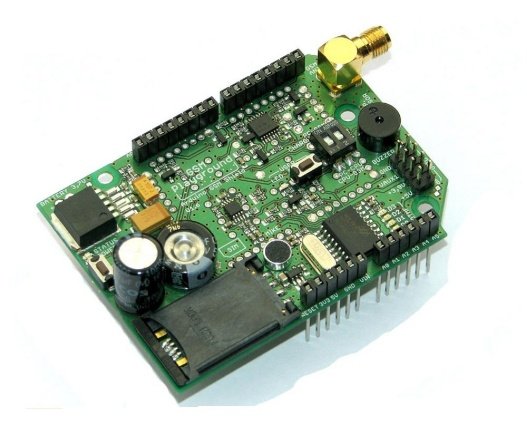
UpSmart PCBA supports OEM & EMS, PCBA for IoT, GSM GPRS IoT module PCBA, industrial IoT gateway board assembly, cellular IoT terminal PCBA, low power IoT device PCB, battery powered IoT sensor node assembly, IoT connectivity module PCBA service, embedded IoT control board manufacturing, wireless IoT communication PCBA, SIM based IoT device assembly, industrial grade IoT electronics PCBA
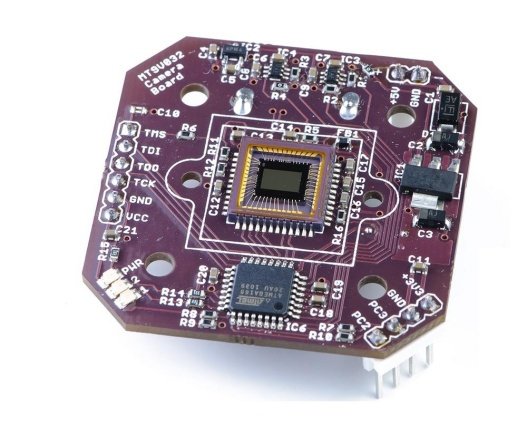
UpSmart PCBA supports OEM & EMS, PCBA for Security, security camera PCB assembly, CMOS sensor module for surveillance, analog CCTV camera PCBA, IP camera motherboard assembly, low light imaging PCBA for security, IPC-A-610 security electronics assembly, surveillance camera board manufacturing, security device PCBA traceability, machine vision camera module PCBA, infrared security camera PCB
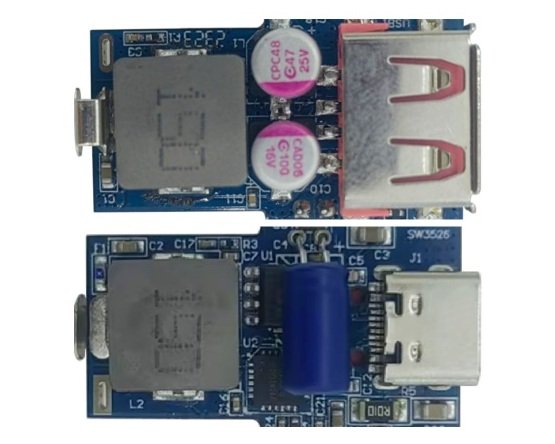
UpSmart PCBA supports OEM & EMS, PCBA for Automotive, automotive USB charger PCBA assembly, car charger PCB manufacturing, AEC-Q compliant PCBA for automotive, 12V to USB fast charger board, vehicle power adapter PCBA service, automotive electronics contract manufacturing, DC-DC converter PCBA for cars, IPC Class 2 automotive PCBA, aftermarket car charger PCB assembly, automotive power supply PCBA solution
UpSmart PCBA supports OEM & EMS, PCBA for Medical Device, medical device PCBA manufacturing, ISO 13485 certified EMS for medical electronics, ventilator control board assembly service, IPC Class 3 PCBA for medical devices, medical PCBA traceability requirements, high reliability PCBA for respiratory devices, medical electronics contract manufacturing, DFM for medical device PCB assembly, medical grade component sourcing for PCBA, respiratory therapy device PCB assembly
specializing in end-to-end printed circuit board fabrication and full-turnkey PCB assembly services.