
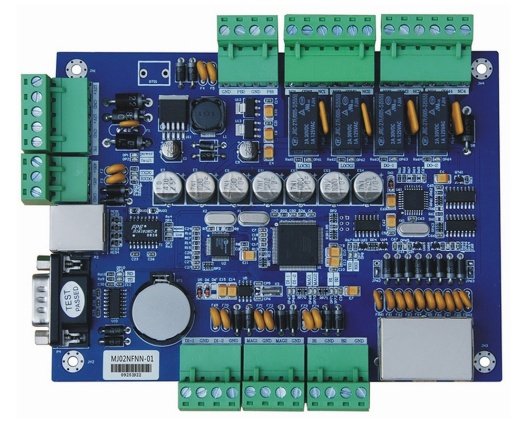
UpSmart PCBA supports OEM & EMS, PCBA for Industrial Control, industrial IO control board assembly, multi-channel relay output PCBA, PLC control card PCBA manufacturing, industrial data acquisition PCBA, factory automation controller board, IPC Class 3 industrial PCBA, industrial control board EMS service, analog input output module PCBA, rugged industrial controller PCB assembly, 24V industrial relay module PCBA
If you’ve ever deployed an industrial IO module that worked perfectly on the bench but started dropping serial packets, sticking relay contacts, or drifting analog readings the moment it was installed in a noisy factory floor cabinet, you already know the hard truth: PCBA for industrial control is not just consumer electronics repackaged with green terminal blocks. The industrial electrical environment is harsh — with inductive load spikes, conducted noise, wide temperature swings, and 24/7 runtime that destroy commodity boards in months.
This deep dive breaks down a production-ready multi-channel industrial IO and relay control mainboard from a manufacturing engineering and procurement perspective. Designed for factory automation, machine control, and remote data acquisition, this assembly integrates relay outputs, analog inputs, and dual communication interfaces in a panel-mount form factor built for sustained industrial service. We’ll cover hardware architecture, design trade-offs that directly impact field reliability, volume manufacturing quality gates, performance grade selection, and how to vet an EMS partner that delivers consistent, field-proven control assemblies — not just units that pass a no-load bench test. No generic marketing claims — just the technical and operational details that determine your uptime, service life, and total program cost.
This assembly is a general-purpose industrial control and data acquisition board, purpose-built for integration into PLC systems, machine control panels, and building automation equipment. It combines discrete relay outputs, analog signal inputs, and standard industrial communication ports on a single rigid board with field-wirable terminal blocks.
| Category | Specification | Design Rationale |
| Main Processing Unit | 32-bit industrial MCU with integrated peripherals | Runs control logic, data acquisition, and communication stacks; long-lifecycle industrial-grade silicon |
| Output Channels | 8-channel relay output, 24V / 2 A rating | Electromechanical relays for direct load switching; suitable for actuators, contactors, and indicator loads |
| Input Channels | 16 channel analog input + digital input | Supports 0–10V / 4–20mA analog sensors and discrete digital status signals |
| Communication Interfaces | 10/100 Ethernet + RS232 serial | Supports both modern industrial Ethernet and legacy serial integration paths |
| On-board Features | RTC battery backup, status LEDs, ESD / surge protection | Real-time clock for time-stamped logging; built-in transient protection for field wiring |
| Power Input | 24V DC nominal, wide-range operation | Standard industrial control voltage; withstands brownout and transient conditions |
| PCB Construction | 2-layer FR-4, 1.6mm, lead-free HASL | Thick copper on power paths; dedicated isolation barriers between field and logic sections |
| Mechanical Form Factor | Panel-mount with screw terminal I/O | Standard DIN-rail / cabinet mounting; tool-free field wiring |
| Workmanship Standard | IPC-A-610 Class 2 standard; Class 3 critical paths | Balances cost and reliability; Class 3 available for critical infrastructure |
The physical isolation between field-side power circuits and logic-side control circuits is a defining choice for industrial IO control board assembly products. It adds a small amount of BOM cost, but it eliminates the ground loops and common-mode noise that are the number one cause of intermittent communication failures and analog drift in factory environments.
Four design decisions directly determine long-term field reliability, and they are the most commonly skipped optimizations on low-cost industrial control boards.
Every field-facing input and output channel is isolated from the main control logic, with separate power domains and ground references. This prevents voltage transients from inductive loads — like contactors and motor starters — from propagating back into the MCU and causing lockups, measurement drift, or permanent damage. Cheap commodity boards skip isolation to save a few cents per channel, and the result is random resets, blown inputs, and unexplained communication dropouts that are almost impossible to debug in the field. For multi-channel relay output PCBA systems driving real industrial loads, isolation is non-negotiable.
All active and passive components are derated for the full industrial temperature range, with electrolytics and semiconductors selected for -40°C to +85°C operation. Control cabinets routinely reach 60°C+ inside on summer days, and commodity boards rated for 0–50°C commercial use will drift out of spec or fail prematurely. For factory automation controller board deployments expected to run 24/7 for 10+ years, component derating is the single biggest driver of service life.
The board includes pi-filtering on all external ports, a solid ground plane under the logic section, and controlled slew-rate switching on digital outputs to meet EN 61000 / FCC Part 15 industrial EMC requirements. This is the most commonly skipped optimization on cheap boards — and the most common reason a product fails certification on the first attempt. For PLC control card PCBA manufacturing programs targeting EU or North American industrial markets, pre-compliant layout routinely saves 2–3 certification cycles later in the program.
Screw terminals are placed for easy access and torque-rated connection, with reinforced solder pads to resist vibration fatigue. Heavy components like relays and connectors are placed away from board edges and supported with additional solder fillet to withstand cabinet vibration. Field return data consistently shows that loose solder joints on terminal blocks and heavy components cause 30% of industrial board failures — almost all of which are preventable with proper pad and layout design.
Delivering consistent industrial data acquisition PCBA at volume requires defined, auditable process controls that go far beyond standard consumer assembly. A mature industrial control EMS flow includes these mandatory gates:
For rugged industrial controller PCB assembly programs, per-unit analog calibration is the step that most inexperienced EMS partners skip — and the step that most determines real-world measurement accuracy.
Not every industrial control program requires the same level of performance and certification. Choosing the right grade is one of the highest cost and reliability decisions a procurement team makes.
| Grade | Typical Application | Operating Temperature | MTBF Target | Relative Cost | Annual Field Failure Rate |
| Commercial Light Industrial | Light commercial, building automation, indoor use only | 0 – 50°C | ~50,000 hours | 1.0x baseline | 3 – 5% |
| Standard Industrial | Factory automation, machine control, general industrial | -20 – 70°C | > 150,000 hours | 1.6 – 2.0x | 0.8 – 1.5% |
| Critical Infrastructure | Utility, transportation, safety-critical control | -40 – 85°C | > 300,000 hours | 2.8 – 4.0x | < 0.3% |
Most general-purpose factory automation programs fall into the standard industrial grade. Full critical-infrastructure grade is only justified for safety-related or extremely long-service-life deployments.
Industrial control PCBA refers to printed circuit board assemblies purpose-built for factory automation, machine control, data acquisition, and process monitoring equipment. These assemblies are designed for wider temperature ranges, electrical noise immunity, and 24/7 reliability that standard consumer PCBAs do not provide.
No. Most general-purpose industrial control products use IPC-A-610 Class 2, with Class 3 criteria applied only to critical signal and power paths. Full Class 3 is reserved for safety-critical and high-reliability infrastructure applications.
Missing input/output isolation is the number one cause of field failures. Without isolation, inductive load transients and ground loop noise cause measurement drift, communication dropouts, and permanent component damage that would not appear during bench testing.
Technically, yes, but reliability and consistency are usually poor. Industrial assembly requires stricter change control, component grade management, calibration capability, and traceability that most consumer-focused shops do not maintain as standard practice.
At minimum: in-circuit test, full functional test, and isolation withstand verification. High-volume and high-accuracy programs should also include per-channel analog calibration and burn-in screening to reduce early-life field failures.
If you’re developing an industrial IO module, PLC card, or automation controller and need a manufacturing partner with real industrial control and analog experience, send us your design files, BOM, and target volume. Our engineering team will provide a complimentary DFM review, risk assessment, and transparent quotation with clearly separated NRE and per-unit costs.
We specialize in high-volume PCBA for industrial control, including IO modules, data acquisition boards, and automation controllers, with controlled manufacturing processes, full traceability, and built-in EMC and reliability design support. Contact us today to discuss your program.
UpSmart PCBA brings nearly a decade of expertise to multilayer PCB manufacturing, serving industrial clients worldwide that demand tight tolerances, long-term durability, and batch-to-batch consistency.
We focus on custom PCB fabrication and full turnkey PCBA assembly. Your design files move straight through production into fully built, tested units ready for final installation — no fragmented handoffs between separate vendors. We scale seamlessly from small prototype runs to high-volume mass production, with end-to-end in-house capabilities spanning component sourcing, bare board manufacturing, in-process quality testing, and final packaging.
We build every order around three non-negotiables: quality, engineering rigor, and reliable turnaround. For our global industrial customers, this translates to simpler supply chains, fewer production disruptions, and electronic systems that deliver consistent performance over their full service life.
Email: sales@upsmartpcba.com
WhatsApp/Phone: +86 199 2656 6516
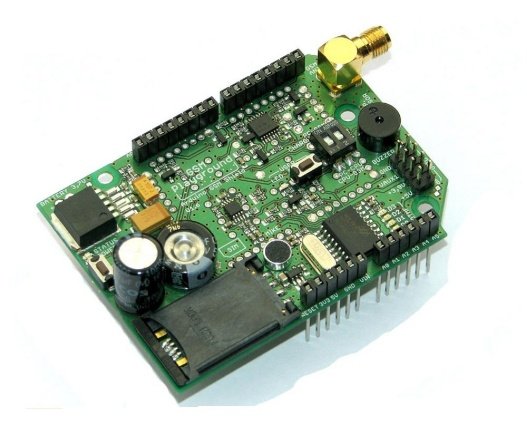
UpSmart PCBA supports OEM & EMS, PCBA for IoT, GSM GPRS IoT module PCBA, industrial IoT gateway board assembly, cellular IoT terminal PCBA, low power IoT device PCB, battery powered IoT sensor node assembly, IoT connectivity module PCBA service, embedded IoT control board manufacturing, wireless IoT communication PCBA, SIM based IoT device assembly, industrial grade IoT electronics PCBA
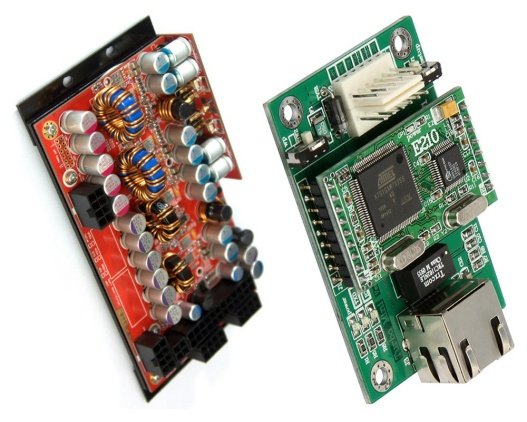
UpSmart PCBA supports OEM & EMS, PCBA for Power Supply, multi-channel DC-DC converter PCBA, industrial power supply board assembly, high current power module manufacturing, regulated power supply PCB service, switch mode power supply PCBA, power electronics contract manufacturing, IPC Class 2 power supply assembly, custom power converter board EMS, isolated power supply PCBA design, power supply unit (PSU) PCBA service
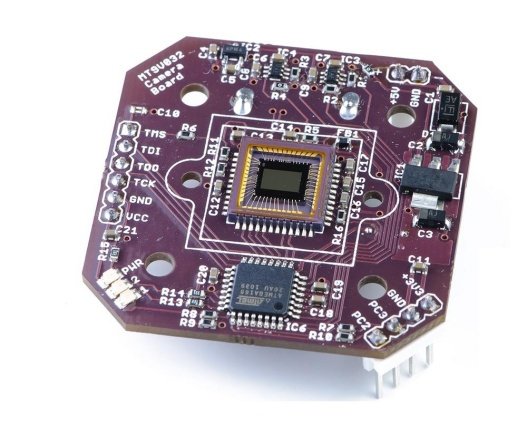
UpSmart PCBA supports OEM & EMS, PCBA for Security, security camera PCB assembly, CMOS sensor module for surveillance, analog CCTV camera PCBA, IP camera motherboard assembly, low light imaging PCBA for security, IPC-A-610 security electronics assembly, surveillance camera board manufacturing, security device PCBA traceability, machine vision camera module PCBA, infrared security camera PCB
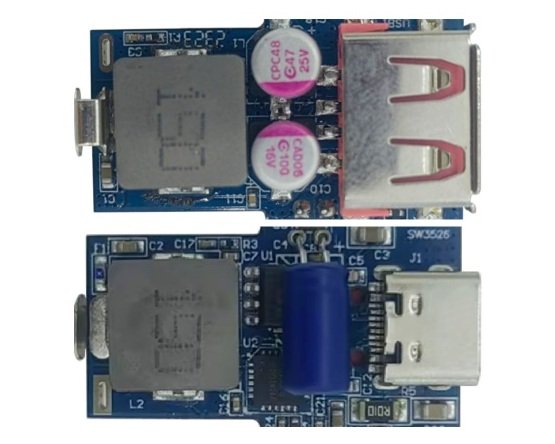
UpSmart PCBA supports OEM & EMS, PCBA for Automotive, automotive USB charger PCBA assembly, car charger PCB manufacturing, AEC-Q compliant PCBA for automotive, 12V to USB fast charger board, vehicle power adapter PCBA service, automotive electronics contract manufacturing, DC-DC converter PCBA for cars, IPC Class 2 automotive PCBA, aftermarket car charger PCB assembly, automotive power supply PCBA solution
specializing in end-to-end printed circuit board fabrication and full-turnkey PCB assembly services.