
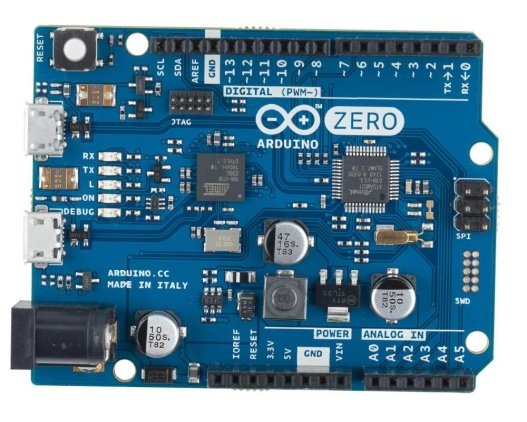
UpSmart PCBA supports OEM & EMS, PCBA for Consumer, open-source development board PCBA, Arduino compatible controller board, consumer electronics PCB assembly, maker education development board, hobbyist electronic controller PCB, USB powered microcontroller board, DIY electronic project kit PCBA, IPC Class 2 consumer PCBA, educational electronics kit assembly, retail consumer electronics PCB manufacturing
If you’ve ever sourced a batch of open-source development boards for a school maker program or retail product line, only to find 12–18% of units failing basic USB enumeration, with misaligned pin headers that won’t accept standard shields, you already know the hard truth: PCBA for consumer electronics is not just “components soldered onto a board.” For developer-facing products like microcontroller boards, mechanical consistency, signal integrity on every IO path, and reliable USB connectivity are not nice-to-haves — they are the difference between five-star reviews and a flood of returns.
This deep dive breaks down a production-ready Arduino Zero form-factor development board from a manufacturing engineering and procurement perspective. Built around the Atmel SAMD architecture with native USB and full ecosystem compatibility, this design balances maker-friendly usability, classroom durability, and high-volume producibility. We’ll cover hardware architecture, layout decisions that directly impact real-world reliability, volume production quality gates, grade selection, and how to vet an EMS partner that delivers consistent retail-ready assemblies — not just boards that work once on a bench. No generic marketing claims — just the technical and operational details that determine your defect rate, return cost, and total program value.
This board is a full-featured microcontroller development platform targeted at hobbyists, STEM education, and rapid prototyping. It maintains standard pinout and form-factor compatibility with the widely adopted Zero ecosystem, so existing shields, code, and curriculum work without modification.
| Category | Specification | Design Rationale |
| Main Microcontroller | Atmel SAMD series 32-bit ARM Cortex-M0+ MCU | 32-bit core with native USB support; long-lifecycle silicon widely used in maker and education markets |
| IO Interfaces | 14x digital IO pins, 6x analog inputs, hardware PWM, I2C / SPI / UART | Standard Zero pinout; 100% compatible with existing ecosystem shields and code |
| USB Connectivity | Native USB device port + debug USB port | Supports both user USB and serial debug / programming |
| Power Options | 7–12V DC barrel jack, USB bus power | Flexible power for desktop, battery, and embedded use cases |
| On-board Peripherals | Reset button, power LED, status LED, linear voltage regulator | Standard user-facing features expected in the ecosystem |
| PCB Construction | 2-layer FR-4, 1.6mm, lead-free HASL | Low-cost, durable construction suitable for retail and education use |
| Pin Headers | 2.54mm [0.1″] male header, through-hole | Standard spacing for universal shield compatibility |
| Workmanship Standard | IPC-A-610 Class 2 | Standard for consumer electronics; Class 3 available on request for premium SKUs |
The strict pinout and mechanical compatibility are a deliberate choice for open-source development board PCBA products. Even a 0.2mm shift in header placement will break compatibility with thousands of third-party shields — a defect that is invisible on a schematic but destroys product value for end users.
Three design decisions separate retail-ready development boards from hobbyist prototypes, and each one addresses a failure mode that routinely plagues low-cost commodity boards.
Through-hole pin headers are placed to exact 2.54mm grid dimensions, with panelization and soldering fixtures designed to hold position through wave soldering. Cheap boards use hand-placed or poorly fixtured headers, resulting in tilted pins and spacing errors that prevent shield installation. For Arduino-compatible controller board volume production, header position is a critical dimension, not a cosmetic one.
The USB data lines use controlled-impedance routing and ESD protection, and the power input includes reverse-polarity protection and bulk capacitance. Classroom and hobbyist environments are rough — users plug in power backwards, yank cables, and expose boards to static. Boards without this protection fail at 2–3x the rate in real-world use. For maker education development board programs, durability directly determines total cost of ownership over a school year.
The crystal oscillator and high-speed USB paths are routed away from switching power sections to prevent jitter and communication dropouts. Nothing is more frustrating for a developer than a board that works fine on the bench but drops serial characters when a motor shield is connected. Good hobbyist electronic controller PCB layout accounts for real-world stacked-shield use cases, not just bare-board operation.
Delivering consistent retail consumer electronics PCB assembly at volume requires defined, repeatable process gates. For this development board, the controlled workflow includes these non-negotiable steps:
For DIY electronic project kit PCBA programs, pre-loaded firmware and ready-to-use units are a small added cost that dramatically improves end-user experience and reduces support tickets.
Not every consumer development board program requires the same level of consistency and support. Choosing the right grade is one of the highest cost and reliability decisions a procurement team makes.
| Grade | Typical Use Case | Header Tolerance | Test Coverage | Relative Per-Unit Cost | Typical First-Pass Yield Target |
| Entry Commodity | Discount retail, low-cost kits | Loose; shield fit not guaranteed | Basic power-on only | 1.0x baseline | 88 – 92% |
| Standard Retail | Online retail, hobbyist market | Tight; 100% shield compatible | Full functional + USB test | 1.2 – 1.4x | 95 – 97% |
| Education Bulk | School districts, STEM programs, classroom kits | Premium; zero mechanical defect target | Full test + burn-in screening | 1.5 – 1.8x | 97 – 99% |
Most retail and maker programs fall into the standard retail grade. Full education-bulk grade is justified for large institutional deployments where on-site failure handling is expensive.
Consumer PCBA refers to printed circuit board assemblies built for retail, hobbyist, education, and general consumer use. These assemblies balance cost, usability, and reliability for end-consumer products, rather than the extreme environmental requirements of industrial or medical devices.
Most issues trace back to two shortcuts: poorly fixtured through-hole headers that shift during soldering, and undersized signal protection that causes USB and communication failures. Both are invisible on a schematic but immediately obvious to the end user.
Technically, yes, but consistency varies dramatically. Developer boards require specific mechanical tolerances, functional test setup, and firmware loading that most general-purpose assembly lines do not maintain as standard practice.
At minimum: power-up verification, USB enumeration, and basic IO continuity. Retail and education-grade programs should also include firmware pre-loading and burn-in screening to reduce early-life returns.
No. Two boards with the same schematic can have very different real-world performance depending on layout quality, component selection, and assembly consistency. Cheap boards often have higher noise, weaker USB reliability, and shorter service life.
If you’re developing a development board, STEM education kit, or other consumer electronics product and need a manufacturing partner that understands both product usability and volume production, send us your design files, BOM, and target volume. Our engineering team will provide a complimentary DFM review, risk assessment, and transparent quotation with clearly separated NRE and per-unit costs.
We specialize in high-volume PCBA for consumer products, including development boards, electronic kits, and maker education hardware, with controlled manufacturing processes, full traceability, and retail-ready quality. Contact us today to discuss your program.
UpSmart PCBA brings nearly a decade of expertise to multilayer PCB manufacturing, serving industrial clients worldwide that demand tight tolerances, long-term durability, and batch-to-batch consistency.
We focus on custom PCB fabrication and full turnkey PCBA assembly. Your design files move straight through production into fully built, tested units ready for final installation — no fragmented handoffs between separate vendors. We scale seamlessly from small prototype runs to high-volume mass production, with end-to-end in-house capabilities spanning component sourcing, bare board manufacturing, in-process quality testing, and final packaging.
We build every order around three non-negotiables: quality, engineering rigor, and reliable turnaround. For our global industrial customers, this translates to simpler supply chains, fewer production disruptions, and electronic systems that deliver consistent performance over their full service life.
Email: sales@upsmartpcba.com
WhatsApp/Phone: +86 199 2656 6516
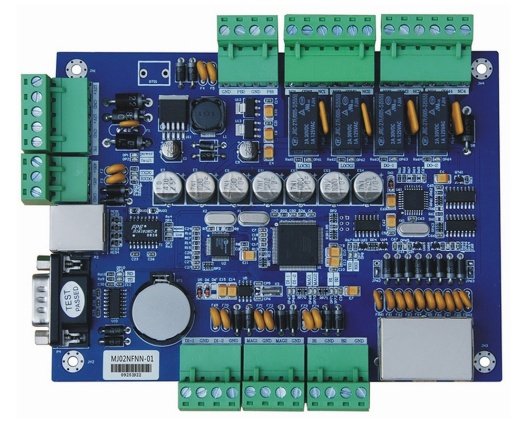
UpSmart PCBA supports OEM & EMS, PCBA for Industrial Control, industrial IO control board assembly, multi-channel relay output PCBA, PLC control card PCBA manufacturing, industrial data acquisition PCBA, factory automation controller board, IPC Class 3 industrial PCBA, industrial control board EMS service, analog input output module PCBA, rugged industrial controller PCB assembly, 24V industrial relay module PCBA
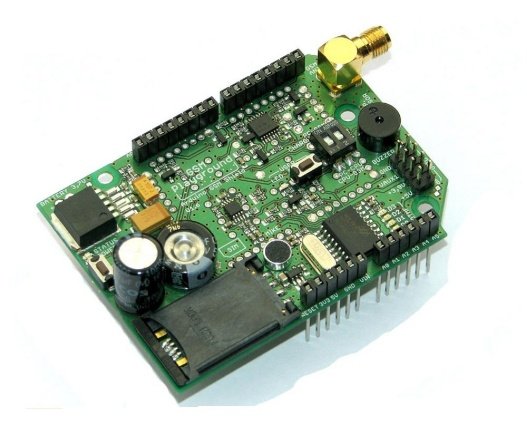
UpSmart PCBA supports OEM & EMS, PCBA for IoT, GSM GPRS IoT module PCBA, industrial IoT gateway board assembly, cellular IoT terminal PCBA, low power IoT device PCB, battery powered IoT sensor node assembly, IoT connectivity module PCBA service, embedded IoT control board manufacturing, wireless IoT communication PCBA, SIM based IoT device assembly, industrial grade IoT electronics PCBA
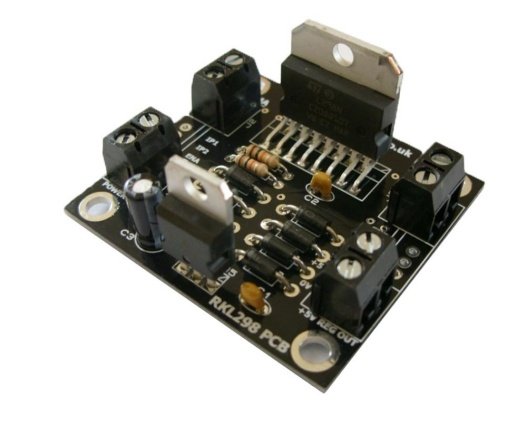
UpSmart PCBA supports OEM & EMS, PCBA for Robotics, dual H-bridge motor driver PCBA, L298N motor controller board assembly, DC motor drive PCBA for robotics, smart car motor driver PCB, industrial robot motion control PCBA, stepper motor driver module assembly, robotics power electronics PCBA, IPC Class 2 robot controller board, embedded motor drive PCB manufacturing, mobile robot motor control PCBA
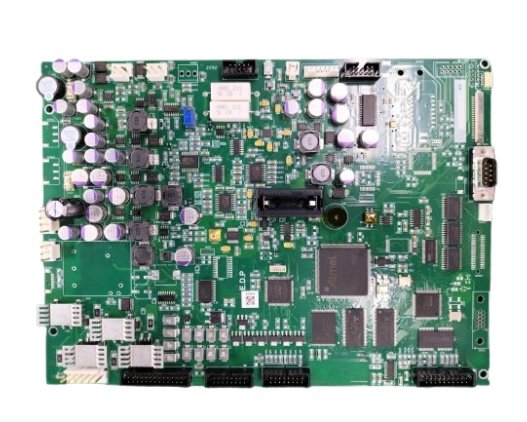
UpSmart PCBA supports OEM & EMS, PCBA for Medical Device, medical device PCBA manufacturing, ISO 13485 certified EMS for medical electronics, ventilator control board assembly service, IPC Class 3 PCBA for medical devices, medical PCBA traceability requirements, high reliability PCBA for respiratory devices, medical electronics contract manufacturing, DFM for medical device PCB assembly, medical grade component sourcing for PCBA, respiratory therapy device PCB assembly
specializing in end-to-end printed circuit board fabrication and full-turnkey PCB assembly services.