
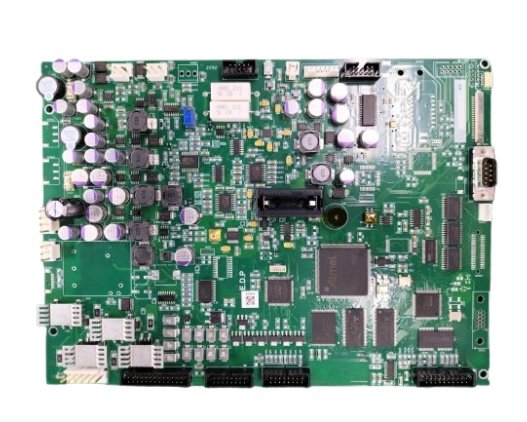
UpSmart PCBA supports OEM & EMS, PCBA for Medical Device, medical device PCBA manufacturing, ISO 13485 certified EMS for medical electronics, ventilator control board assembly service, IPC Class 3 PCBA for medical devices, medical PCBA traceability requirements, high reliability PCBA for respiratory devices, medical electronics contract manufacturing, DFM for medical device PCB assembly, medical grade component sourcing for PCBA, respiratory therapy device PCB assembly
If you’ve ever brought a Class II medical device to market, you already know the hard truth: a PCBA for a medical device is not just a higher-quality consumer board. It is a controlled, traceable, validated subsystem where every component, every solder joint, and every process change carries regulatory and patient safety weight. For respiratory therapy devices in particular, a single undetected sensor drift, a marginal solder joint on a pressure signal path, or an unapproved component substitution can directly impact clinical performance — and regulatory compliance.
This deep dive breaks down the engineering, manufacturing, and supply chain requirements of a high-reliability ventilator control mainboard, built on the Microchip AT91RM9200 platform with integrated multi-signal respiratory monitoring. We’ll cover hardware architecture, clinical capability, manufacturing quality gates, DFM best practices, and how to vet an EMS partner that can deliver production-ready, regulatory-compliant medical assemblies — not just “boards that work on the bench.” No generic marketing claims, just the operational and technical details that determine your regulatory path, field reliability, and total cost of ownership.
This mainboard is the central processing unit of a non-invasive respiratory therapy system, purpose-built for real-time physiological signal processing and tight loop control. The hardware architecture is balanced between computational throughput, deterministic timing, and long-term component availability — three non-negotiables for a high-reliability PCBA for respiratory devices.
| Category | Specification | Design Rationale |
| Main Application Processor | Microchip AT91RM9200 ARM9 MCU | 32-bit RISC core runs core ventilation algorithms, user interface logic, and data logging; long-lifecycle industrial/medical-grade silicon |
| Memory Subsystem | Dual-channel DRAM + serial flash | 512 MB RAM enables concurrent signal acquisition, algorithm execution, and event logging without data dropouts |
| Hardware Accelerator | Intel independent CPLD | Offloads timing-critical signal sampling and low-level control loops from the main CPU; delivers sub-millisecond response for pressure and flow regulation |
| Sensor Interface Front-End | 3+ channel analog input: pressure, flow rate, turbine speed | Dedicated low-noise signal paths with isolated analog/digital partitioning for accurate physiological signal capture |
| System I/O | RS232 debug, expansion headers, alarm relay outputs | Supports factory calibration, firmware updates, and peripheral device integration |
| Workmanship Class | IPC-A-610 Class 3 | Built to critical acceptability criteria for life-support / critical care device applications |
| Operating Temperature Range | 0 °C to 40 °C | Rated for sustained 24/7 operation in clinical and home care environments |
The split architecture — MCU for high-level control + CPLD for real-time signal handling — is a defining design choice for ventilator control board assembly service projects. It eliminates the timing jitter inherent in purely software-based sampling, which is mandatory for accurate breath-by-breath respiratory measurements.
Hardware design directly defines clinical performance. This board’s signal chain and processing architecture enable advanced respiratory monitoring features that would not be feasible on a generic control platform.
The board synchronizes pressure, flow, and turbine speed signals in hardware via the CPLD, ensuring time-aligned sampling across all three channels. This fused dataset is the foundation of accurate non-invasive ventilation control, delivering stable tidal volume delivery even under changing leak conditions.
One of the most clinically valuable features is native, real-time intrinsic PEEP detection — calculated continuously from flow and pressure waveforms with no extra sensors or manual intervention. This is only possible because the front-end signal chain is designed for low noise and high sampling resolution, and the CPLD handles waveform feature extraction at hardware speed. Measurements are updated every breath cycle, giving clinicians an accurate, ongoing view of patient respiratory state.
The high-resolution analog front-end also supports esophageal pressure monitoring, enabling quantitative measurement of patient respiratory effort. This data is used to evaluate patient-ventilator synchrony, detect asynchrony events, and guide lung-protective ventilation settings. For this function, PCB layout partitioning is critical: analog input sections are physically separated from digital switching circuits to prevent noise from corrupting low-level pressure signals.
For engineering and procurement teams evaluating respiratory therapy device PCB assembly partners, the key takeaway is this: clinical performance is not just firmware — it is baked into the PCB stackup, layout partitioning, and component selection at the PCBA level.
Many EMS providers advertise medical capability, but true medical device PCBA manufacturing operates under a fundamentally stricter set of rules. The table below summarizes the most meaningful differences that impact product compliance and reliability.
| Requirement | Standard Industrial PCBA (Class 2) | Medical Device PCBA (Class 3) |
| Workmanship Standard | IPC-A-610 Class 2; some cosmetic defects acceptable | IPC-A-610 Class 3; zero defects allowed on critical signal and power paths |
| Component Traceability | Lot-level tracking optional; often by PO only | Full lot-level traceability for every component; unique serial number per board with complete Device History Record (DHR) |
| Change Control | Informal; customer notification usually sufficient | Formal ECN process required; all changes validated, documented, and approved before implementation |
| Component Sourcing | Authorized distributors preferred; broker sourcing common for shortages | Approved Vendor List (AVL) controlled; medical/automotive-grade parts preferred; gray-market sourcing is prohibited |
| Production Environment | Standard ESD-protected workspace | Controlled cleanroom / ESD environment with documented environmental monitoring |
| Quality Management System | ISO 9001 typical | ISO 13485 mandatory; aligned with FDA 21 CFR Part 820 quality system requirements |
| Lifecycle Expectation | 3–5 year product life typical | 10+ year product support; formal obsolescence management and last-time-buy planning |
This gap is where many medical NPI programs run into trouble. A shop that builds excellent industrial boards will not automatically pass a medical audit — because medical PCBA traceability requirements, change control, and documentation are process capabilities, not just checkboxes on a quote.
Delivering consistent IPC Class 3 PCBA for medical devices requires defined, documented, and auditable processes at every production stage. For a ventilator mainboard of this complexity, the controlled workflow includes these non-negotiable gates:
For ISO 13485-certified EMS for medical electronics, these steps are not optional add-ons — they are the baseline production flow.
Good DFM for medical device PCB assembly is about more than just manufacturability — it is about 10+ year producibility and regulatory compliance. For respiratory device platforms, two DFM priorities deliver the highest long-term value.
Medical products often remain in production for 10–15 years, far longer than consumer or even industrial designs. Component selection prioritizes long-lifecycle industrial/medical-grade parts, with approved alternates qualified at launch. One of the most common failure points we see in rushed medical programs is prototype builds built with spot-market commodity parts, followed by a full requalification cycle when those parts go NRND six months into production. Upfront planning adds a few days to NPI, but it routinely saves 3–6 months of delay later.
Medical devices are repaired and recalibrated in the field. The PCB layout includes accessible test points, clearly marked calibration points, and service-friendly component placement. Repairability is designed in from the start, not treated as an afterthought.
For medical-grade component sourcing for PCBA, alternate components are never swapped in without full validation. Every proposed substitution undergoes electrical performance verification, reliability review, and formal ECN release before being added to the AVL. This is one of the most common areas where less experienced EMS partners cut corners — and where regulatory audit findings most often occur.
Ventilators and critical care respiratory devices require PCBA built to IPC-A-610 Class 3 workmanship standards, with full component traceability and ISO 13485 quality system controls. Class 2 commercial/industrial workmanship is not sufficient for life-support device applications.
For products sold into regulated markets (FDA, CE, etc.), the manufacturing partner must operate under a quality system appropriate for medical devices. ISO 13485 is the globally recognized standard and is effectively a baseline requirement for most regulatory submissions.
Class 2 allows minor cosmetic and workmanship deviations that do not impact form, fit, or function. Class 3 enforces stricter acceptance criteria for all characteristics, with zero defects allowed on critical circuits, because product failure could result in injury or death.
Each production board is assigned a unique serial number. Every component used on the board is logged by manufacturer part number, lot code, and date code. The complete record is stored as part of the Device History Record and is available for audit or field recall purposes.
Technically, yes, but only if they implement and maintain all of the process controls, traceability, documentation, and change management required by medical quality systems. Most industrial EMS shops are not set up for this level of control and documentation rigor.
If you’re developing a respiratory therapy or other Class II/III medical device and need a manufacturing partner that understands both technical performance and regulatory requirements, send us your design files, BOM, and target volume. Our medical engineering team will provide a complimentary DFM review, risk assessment, and phase-by-phase manufacturing plan aligned with ISO 13485 and IPC Class 3 requirements.
We specialize in high-reliability PCBA for medical device programs, including respiratory therapy, patient monitoring, and diagnostic equipment. With controlled manufacturing processes, full traceability, and long-term lifecycle support, we help medical OEMs bring products to market reliably and stay in production for years. Contact us today to discuss your program.
UpSmart PCBA brings nearly a decade of expertise to multilayer PCB manufacturing, serving industrial clients worldwide that demand tight tolerances, long-term durability, and batch-to-batch consistency.
We focus on custom PCB fabrication and full turnkey PCBA assembly. Your design files move straight through production into fully built, tested units ready for final installation — no fragmented handoffs between separate vendors. We scale seamlessly from small prototype runs to high-volume mass production, with end-to-end in-house capabilities spanning component sourcing, bare board manufacturing, in-process quality testing, and final packaging.
We build every order around three non-negotiables: quality, engineering rigor, and reliable turnaround. For our global industrial customers, this translates to simpler supply chains, fewer production disruptions, and electronic systems that deliver consistent performance over their full service life.
Email: sales@upsmartpcba.com
WhatsApp/Phone: +86 199 2656 6516
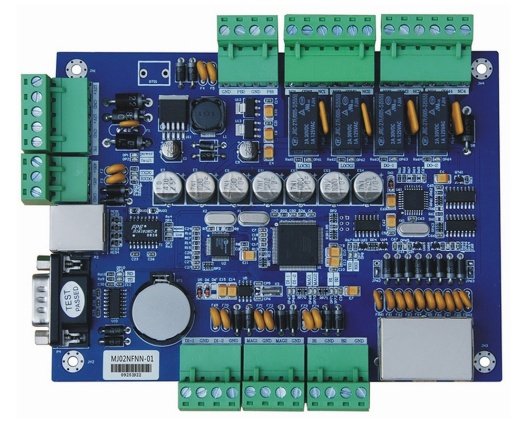
UpSmart PCBA supports OEM & EMS, PCBA for Industrial Control, industrial IO control board assembly, multi-channel relay output PCBA, PLC control card PCBA manufacturing, industrial data acquisition PCBA, factory automation controller board, IPC Class 3 industrial PCBA, industrial control board EMS service, analog input output module PCBA, rugged industrial controller PCB assembly, 24V industrial relay module PCBA
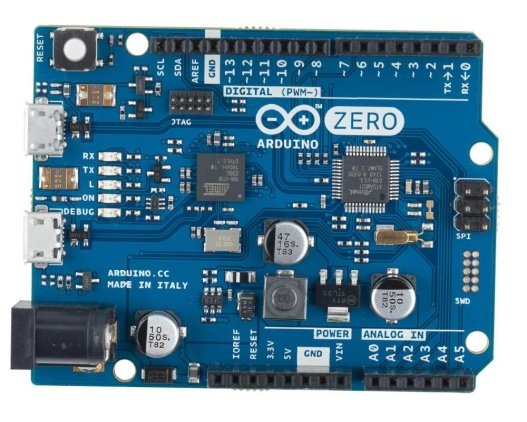
UpSmart PCBA supports OEM & EMS, PCBA for Consumer, open-source development board PCBA, Arduino compatible controller board, consumer electronics PCB assembly, maker education development board, hobbyist electronic controller PCB, USB powered microcontroller board, DIY electronic project kit PCBA, IPC Class 2 consumer PCBA, educational electronics kit assembly, retail consumer electronics PCB manufacturing
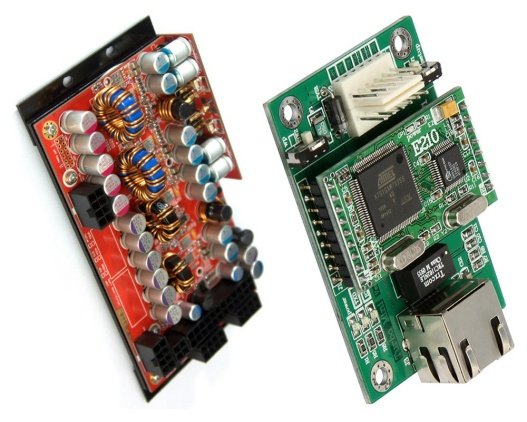
UpSmart PCBA supports OEM & EMS, PCBA for Power Supply, multi-channel DC-DC converter PCBA, industrial power supply board assembly, high current power module manufacturing, regulated power supply PCB service, switch mode power supply PCBA, power electronics contract manufacturing, IPC Class 2 power supply assembly, custom power converter board EMS, isolated power supply PCBA design, power supply unit (PSU) PCBA service
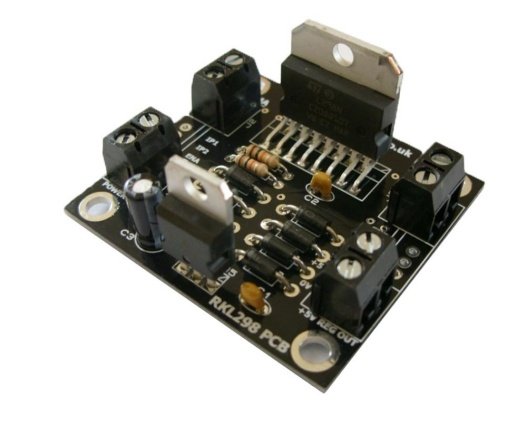
UpSmart PCBA supports OEM & EMS, PCBA for Robotics, dual H-bridge motor driver PCBA, L298N motor controller board assembly, DC motor drive PCBA for robotics, smart car motor driver PCB, industrial robot motion control PCBA, stepper motor driver module assembly, robotics power electronics PCBA, IPC Class 2 robot controller board, embedded motor drive PCB manufacturing, mobile robot motor control PCBA
specializing in end-to-end printed circuit board fabrication and full-turnkey PCB assembly services.