
If you work in PCB sourcing, PCBA manufacturing, or EMS operations, you don’t need a paid market report to tell you 2026 is shaping up to be one of the tightest, most cost-volatile years for printed circuit board materials in recent memory. The three foundational inputs that make up copper clad laminate (CCL) — the structural backbone of every rigid PCB — are all climbing in price simultaneously, with no meaningful relief expected through the end of the year. For teams used to decade-long stable material pricing, the current market is rewriting every cost and lead-time assumption they’ve built their programs around.
The Three Core CCL Materials Driving the Cost Surge
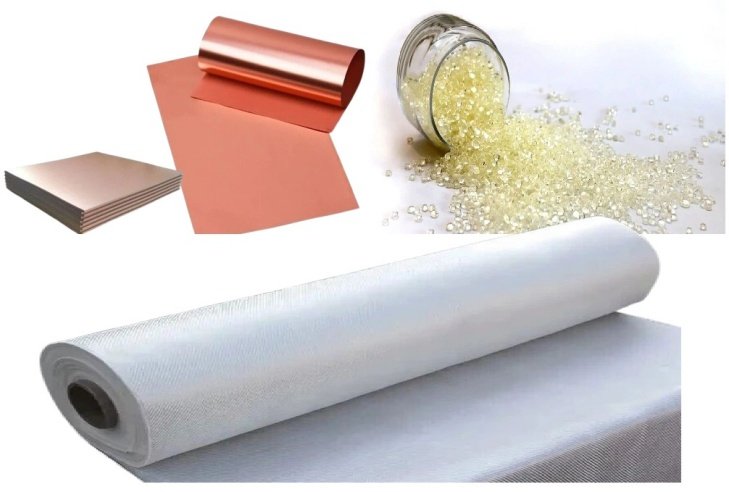
CCL is the base substrate for nearly all rigid PCBs, and it relies on three non-negotiable inputs: copper foil for electrical conduction, fiberglass cloth for mechanical reinforcement, and epoxy resin for insulation and adhesion. Together, they determine 70–80% of raw PCB material cost. All three are currently on steep upward trajectories, each driven by separate supply and demand forces.
| Material Category | 2025 Year-Over-Year Change | 2026 Year-to-Date Change | Full-Year 2026 Projected Change |
| Standard Electrolytic Copper Foil | ~30% | +5% | +10% to +20% |
| High-Speed / Low-Loss Copper Foil | ~60% | +8% | +15% to +25% |
| Standard E-Glass Fiberglass Cloth | 25% – 40% | +10% | ~20% |
| High-End Specialty Fiberglass Grades | ~35% | +12% | ~50% |
| Standard FR-4 Epoxy Resin | 6% – 10% | +10% to +20% (March 2026 step increase) | +15% to +25% |
Copper Foil: The Largest Single Cost Driver
Copper foil is the most expensive CCL component, making up 30–50% of total material cost, with prices tied to global copper markets plus a premium for specialty engineered grades. In 2025, standard electrolytic copper foil rose roughly 30% year over year. In the first four months of 2026, prices have climbed another 5%, with industry forecasters projecting an additional 10–20% increase by year-end as demand outpaces new capacity additions. High-speed copper foil — required for high-frequency server, telecom, and advanced HDI boards — has seen even steeper growth, jumping approximately 60% through 2025. For high-speed designs, foil cost is no longer a minor line item; it is now the single biggest driver of board-level cost increases.
Fiberglass Cloth: Structural Reinforcement With Steep Premium Growth
Fiberglass cloth forms the reinforcing skeleton of CCL, providing mechanical rigidity, dimensional stability, and dielectric insulation. It accounts for 25–40% of total CCL cost. Prices rose 25–40% across standard fiberglass grades in 2025. So far in 2026, the market has seen an additional 10% increase, with a projected 20% full-year rise as energy and raw material costs keep climbing. High-end specialty fiberglass grades for high-frequency and low-loss laminates are in even tighter supply, with price increases approaching 50% as capacity additions lag behind demand for advanced PCB materials.
Epoxy Resin: Stable 2025 Pricing Gives Way to Double-Digit Jumps
Epoxy resin binds copper foil and fiberglass into a solid laminate, and its chemical formulation defines a material’s thermal rating, dielectric performance, and flame retardancy. Through 2025, resin pricing was the most stable of the three inputs, rising only 6–10% for most standard grades. That changed abruptly in March 2026, when most major resin suppliers implemented 10–20% price jumps driven by rising crude oil costs and geopolitical supply chain disruptions. Unlike copper and fiberglass, resin production capacity takes years to bring online, so there are few near-term levers to ease pricing pressure.
CCL Manufacturers Roll Out Hikes and Allocation-Based Supply
It didn’t take long for rising input costs to flow through to finished laminate pricing. The world’s largest CCL producers implemented multiple rounds of price increases starting in 2025, with another broad-based hike rolling out in March 2026.
The bigger shift for PCB buyers, however, is not just price — it is availability. Most major CCL suppliers have moved to allocation-based ordering, meaning customers no longer receive as much material as they order; they get a quota tied to their historical purchase volume. The policy is explicit: high-volume, long-term strategic customers get priority allocation, while smaller or lower-priority accounts face extended lead times, partial shipments, or even suspended quoting for new programs.
The result is a market where securing consistent material supply is often harder than negotiating price. Industry insiders have put it plainly: in 2026, the PCB and EMS shops that can lock in reliable CCL supply will be the ones that can take on new programs and hit committed delivery dates.
What This Means for PCB and EMS Procurement Teams
For procurement and engineering teams, the combined effect of rising material costs and constrained supply shows up in three concrete, program-impacting ways:
- Accelerated cost pass-through: PCB fabricators are passing 70–100% of material cost increases through to customers, with quarterly price adjustments becoming standard instead of the traditional annual review cycle.
- Extended lead times: Standard FR-4 lead times have stretched by 20–30% compared to 2025, with specialty high-speed and high-Tg materials extending even further.
- Disproportionate risk for small orders: Low-volume prototype and NPI orders face the greatest risk of allocation cuts, as suppliers prioritize high-volume, long-running production programs.
Key Takeaways for Navigating the 2026 Material Market
There is no quick fix for broad-based material inflation, but experienced procurement and engineering teams are already adjusting their strategies to reduce program risk:
- Lock in mid-to-long-term supply agreements where possible, even at a modest price premium, to avoid being cut off during allocation cycles.
- Design with standard, widely available FR-4 materials unless performance requirements explicitly justify high-end specialty grades.
- Build material cost volatility into project budgets from the start, rather than assuming stable pricing over a multi-year product lifecycle.
- Partner with EMS providers that have long-standing, high-volume CCL supplier relationships — these are the accounts that get material when supply gets tight.
The current surge in copper, fiberglass, and resin pricing is not a short-term blip. Most industry analysts expect tight supply and upward cost pressure to persist through at least the end of 2026, and possibly into 2027 for high-performance materials. For PCB and EMS teams, the winners of this market cycle will not be the ones that find the lowest per-square-inch price — they will be the ones that build resilient, well-sourced supply chains that can deliver reliably, even when materials are scarce.
✅ Why Choose UpSmart PCBA?
UpSmart PCBA brings nearly a decade of expertise to multilayer PCB/PCBA manufacturing, serving industrial clients worldwide that demand tight tolerances, long-term durability, and batch-to-batch consistency.
We focus on custom PCB fabrication and full turnkey PCBA assembly. Your design files move straight through production into fully built, tested units ready for final installation — no fragmented handoffs between separate vendors. We scale seamlessly from small prototype runs to high-volume mass production, with end-to-end in-house capabilities spanning component sourcing, bare board manufacturing, in-process quality testing, and final packaging.
We build every order around three non-negotiables: quality, engineering rigor, and reliable turnaround. For our global industrial customers, this translates to simpler supply chains, fewer production disruptions, and electronic systems that deliver consistent performance over their full service life.
✅ Contact us
Email: sales@upsmartpcba.com
WhatsApp/Phone: +86 199 2656 6516